Undergraduate Science & Engineering Degrees
Six specialized Bachelor of Science curricula engineered for high-altitude resilience, active watershed management, clean microgrid operation, and environmental compliance.
Six Rigorous Bachelor of Science Majors
Every major features 120 credits, mandatory alpine fieldwork, senior capstone engineering projects, and direct faculty mentorship.

B.S. in Alpine Hydrology & Water Resources Engineering
Rigorous quantitative training in mountain precipitation mechanics, snowpack snow water equivalent (SWE) acoustic telemetry, glacier mass balance, and numerical river basin simulation. Students operate stream gauging stations across the Boulder Creek and Continental Divide watersheds.

B.S. in Climate Analytics & Atmospheric Science
Combines physical atmospheric dynamics with big-data geospatial analytics. Students master eddy covariance flux tower operations, greenhouse gas laser spectrometry, and Front Range ozone modeling in direct collaboration with Boulder federal laboratories.
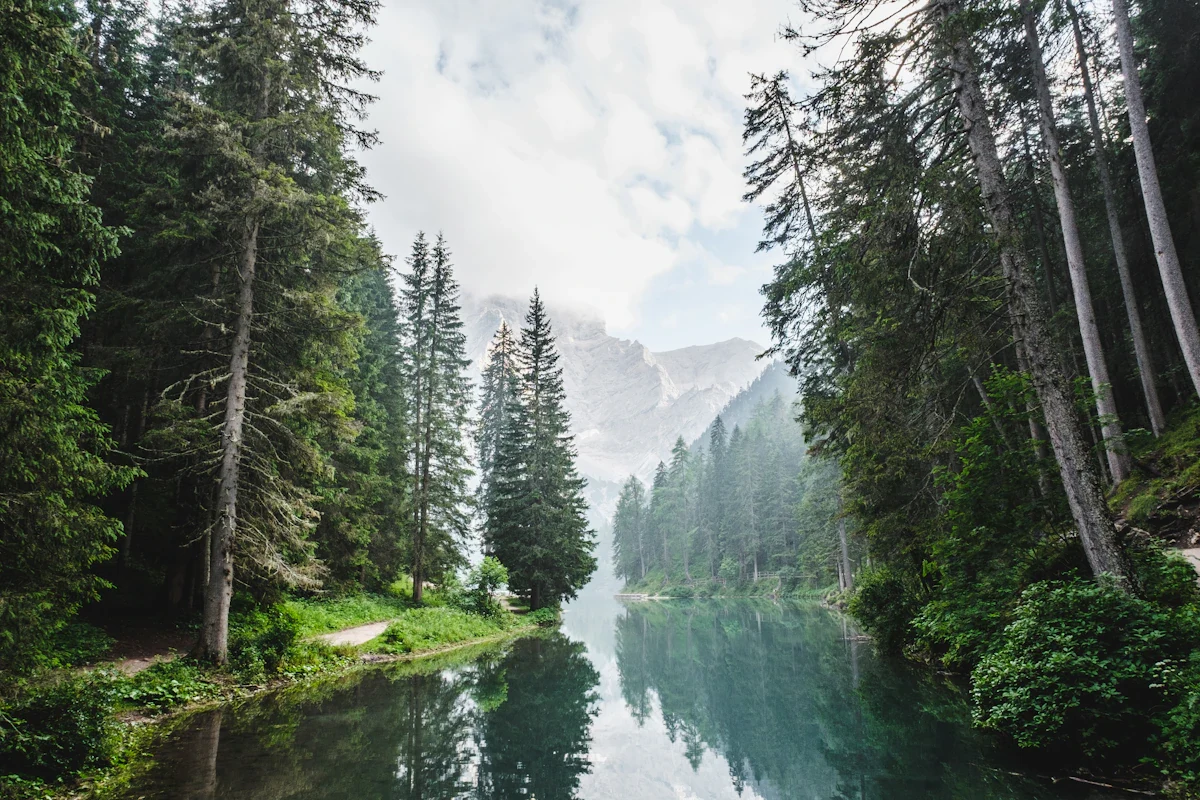
B.S. in Forest Ecology, Wildfire Restoration & Conservation
Prepares future foresters and fire ecologists through hands-on silviculture, thermal infrared fire spread modeling, post-wildfire erosion mitigation, and dendrochronological paleoclimate reconstruction.

B.S. in High-Altitude Renewable Energy Systems
Engineering-focused curriculum targeting cold-climate, high-elevation energy systems. Explores bifacial PV snow albedo gain, freeze-tolerant vanadium flow batteries, high-shear wind turbine aerodynamics, and microgrid SCADA islanding controls.

B.S. in Environmental Geochemistry & Bioremediation
Investigates aqueous geochemical reactions, heavy metal transport across Rocky Mountain mining corridors, and constructed wetland biochar filtration systems. Students conduct field remediation in Superfund watersheds.

B.S. in Environmental Law, NEPA Compliance & Land Stewardship
Comprehensive education in statutory environmental mandates, including NEPA, Clean Water Act, Endangered Species Act, and Western water priority decrees. Emphasizes environmental impact statement (EIS) preparation and public hearings.
Integrated Fieldwork from Year One
Unlike conventional theoretical environmental programs, Crestwood undergraduates spend over 400 hours in subalpine laboratories, measuring snowpack water equivalent, monitoring post-wildfire sediment yields, and operating cold-weather battery storage arrays.
- 100% Offline Computational Modeling: Mastery of GIS GeoPackages, HEC-RAS hydraulics, and Python telemetry scripts.
- Direct Instrumentation Access: Work directly with acoustic Doppler flow meters, sonic anemometers, and mass spectrometers.
- Accredited Professional Certifications: Graduate with NEPA Compliance or Wildfire Dynamics micro-credentials embedded in your degree.

Specialized Academic Pathways
Tailor your environmental education with accelerated graduate degrees, research fellowships, and drone mapping tracks.
Micro-Credentials
Four professional 12-credit certificates for industry practitioners and degree candidates.
View Certificates →GIS & Drone Mapping
UAS LiDAR remote sensing concentration applied across alpine terrain modeling.
GIS Pathway →4+1 Joint Degrees
Accelerated B.S./M.S. pipelines in Watershed Engineering and Atmospheric Physics.
4+1 Programs →Alpine Scholars
Competitive honors fellowship with dedicated research stipends and faculty co-advising.
Honors Fellowship →